What is chamomile good for? Chamomile is one of the most beloved medicinal plants in the world, known for its gentle nature and calming effects.
More than just a simple tea, chamomile carries a long tradition of care, a quiet ritual that connects nature and well-being in the most subtle way.
🌿 What is Chamomile?
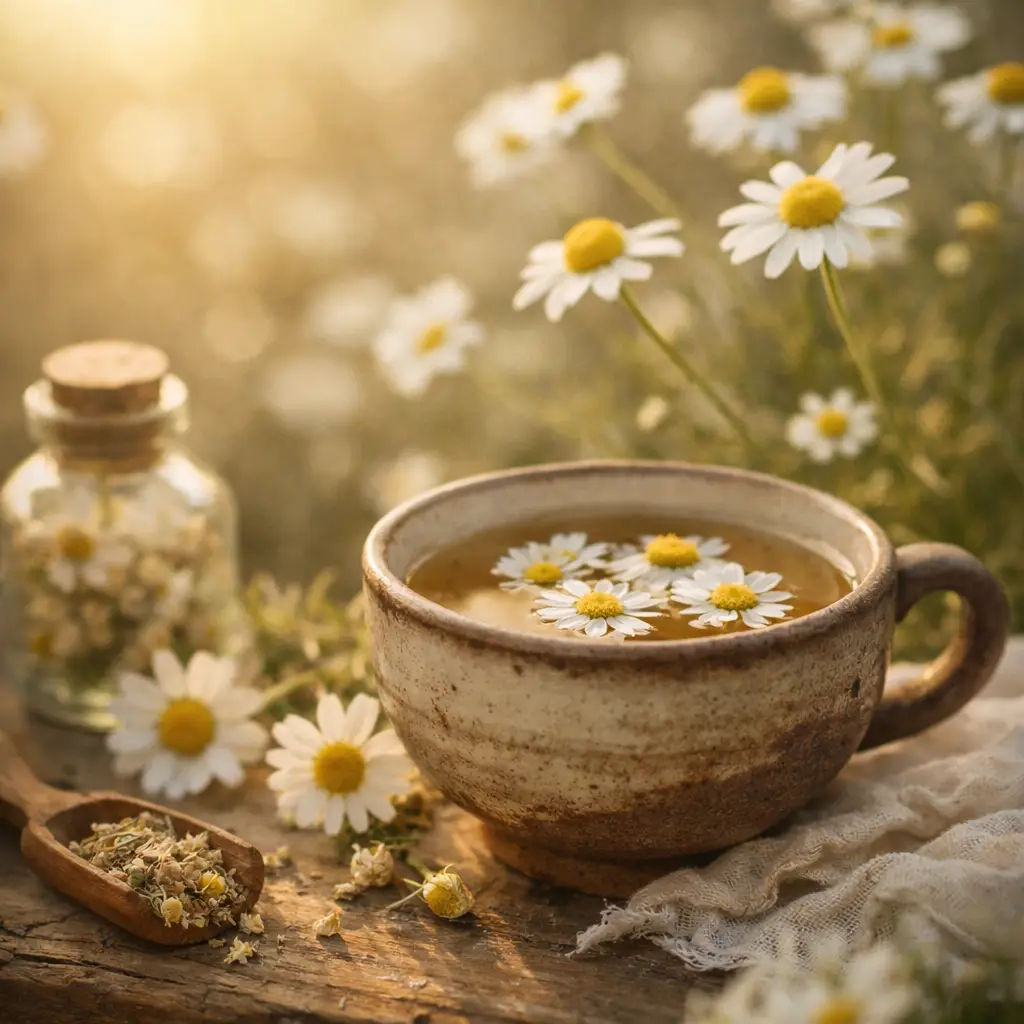
Chamomile refers to a group of daisy-like plants, most commonly Matricaria chamomilla and Chamaemelum nobile.
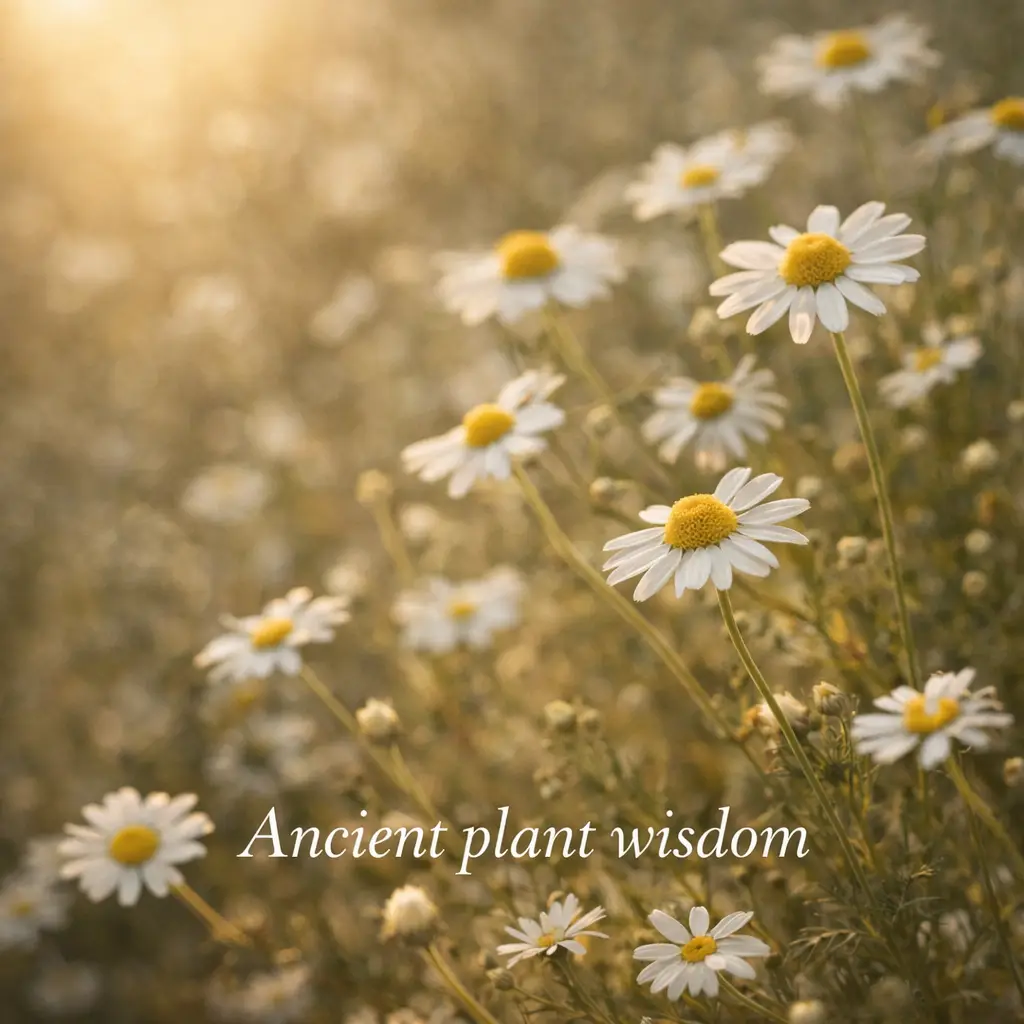
These plants are native to Europe and Western Asia but are now cultivated around the world. Their small white petals and golden centers are not only visually delicate, they also contain compounds responsible for chamomile’s therapeutic properties.
Traditionally, the flowers are dried and used to prepare herbal infusions, extracts and essential oils.
✨ What is chamomile good for? Key benefits
- Promotes relaxation and better sleep
- Helps reduce stress and mild anxiety
- Supports digestive comfort
- May relieve mild inflammation
- Traditionally used for skin soothing
Chamomile is often considered one of the safest and most accessible herbal remedies.
🌼 Traditional Uses of Chamomile
Across cultures, chamomile has been used as a gentle healer.
In ancient Egypt, it was associated with the sun and used for its restorative properties. In European folk traditions, chamomile tea became a household remedy — offered to calm children, ease digestion and support restful sleep.
In many homes, chamomile is not just a plant — it is a ritual.
Many people today still wonder what chamomile is good for, especially when searching for natural ways to relax, sleep better and reduce daily stress.
A warm cup before bedtime, a pause during a busy day, a quiet moment of care..
🔬 What Does Science Say About Chamomile?
Modern research has begun to support many of chamomile’s traditional uses.
Studies suggest that chamomile contains bioactive compounds such as apigenin, a flavonoid that interacts with brain receptors related to relaxation and sleep.
Research published by the National Institutes of Health indicates that chamomile may have mild sedative effects and can help improve sleep quality in some individuals.
Other studies available through PubMed explore its anti-inflammatory and digestive benefits, although more research is still needed to fully understand its effects.
Chamomile is not a miracle cure — but it is a plant with real potential, supported by both tradition and emerging science.
🍵 How to Use Chamomile
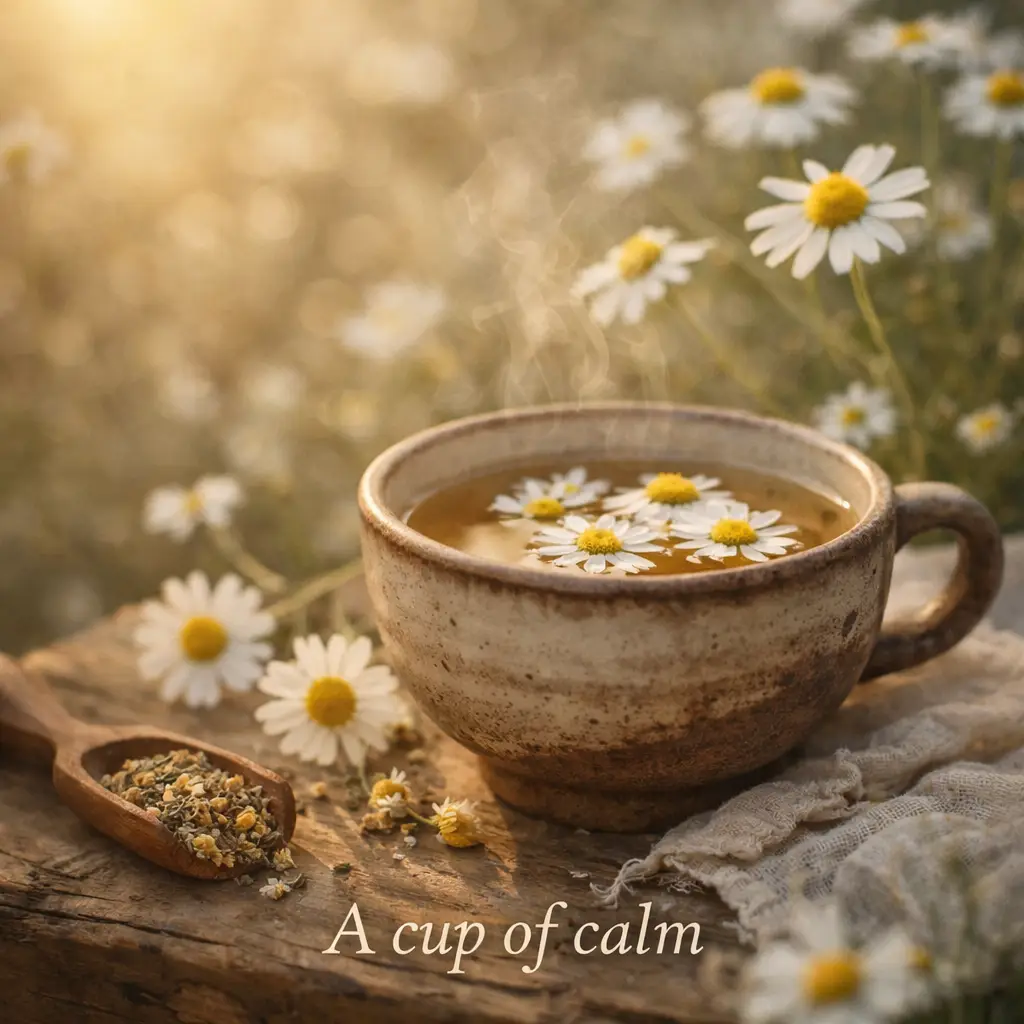
If you’re wondering what chamomile is good for in daily life, the most common and accessible way to use it is as a tea.
Simple preparation:
- 1 teaspoon of dried chamomile flowers
- 1 cup of hot water
- Steep for 5 to 10 minutes
Drink slowly, allowing the warmth and aroma to create a moment of calm.
Chamomile can also be used in:
- Herbal blends
- Essential oils
- Skin compresses
⚠️ Safety and Considerations
Chamomile is generally safe for most people when consumed in moderate amounts.
However:
- People allergic to plants in the daisy family should avoid it
- Pregnant individuals should consult a healthcare professional
- Excessive consumption is not recommended
As with any natural remedy, mindful use is essential.
🌱 Chamomile and the Language of Nature
There is something quiet about chamomile.
It does not impose.
It does not overwhelm.It simply offers.
In a world that often moves too fast, chamomile reminds us that healing can be gentle — and that sometimes, the most powerful remedies are the simplest ones.
🌼 Why chamomile remains so popular
Chamomile continues to be one of the most widely used herbal remedies around the world not only because of its effects, but also because of its accessibility and gentle nature.
Unlike stronger medicinal plants, chamomile can be easily incorporated into daily life — as a tea, a ritual or a moment of pause.
Its popularity across cultures and generations reflects something deeper: a universal need for calm, simplicity and connection with nature.
Frequently Asked Questions
What is chamomile good for?
Chamomile is commonly used to promote relaxation, improve sleep quality and support digestive health. It is also known for its mild calming effects on the nervous system.
Does chamomile help with sleep?
Yes, chamomile may help improve sleep due to compounds like apigenin, which interact with brain receptors linked to relaxation and drowsiness.
Can chamomile reduce anxiety?
Chamomile has mild calming properties and may help reduce symptoms of stress and anxiety, especially when consumed regularly as a tea.
Is chamomile safe to drink every day?
For most people, chamomile is safe when consumed in moderate amounts. However, individuals with allergies to plants in the daisy family should avoid it.
When is the best time to drink chamomile tea?
Chamomile tea is often consumed in the evening, as it helps promote relaxation and prepare the body for sleep.
🌿 Conclusion
Chamomile is more than a herbal tea. It is a bridge between tradition and science, between nature and everyday life.
Whether used for relaxation, sleep or simple comfort, it remains one of the most trusted medicinal plants across cultures.
And perhaps its greatest gift is not only what it does —
but how it invites us to slow down.
🌍 Explore more on Benverde
Benverde is gradually expanding its content in English to share the wisdom of plants with a wider audience.
While most of our content is still in Portuguese, you are warmly invited to explore:
If you would like to see more content in English, feel free to reach out:
Leia também em português
Você também pode acessar a versão em português deste conteúdo: Para que serve a Camomila? Benefícios, chá e usos da Matricaria chamomilla

Criadora do Benverde, compartilho conteúdos sobre plantas medicinais, chás e vida natural com base em saberes tradicionais, observação prática e uso consciente. Acredito em um olhar sensível, responsável e conectado à natureza.
Também compartilho reflexões e conteúdos no LinkedIn.